
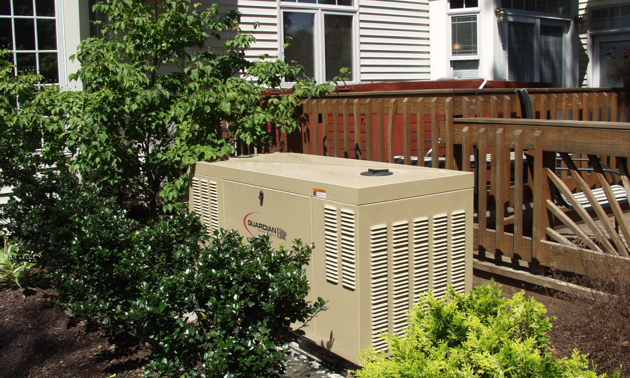
Taking the Mystery out of Backup Generators
• Generators are not intended to provide permanent electrical service to a home. They are designed to operate for extended periods of time in a prolonged power outage, but due to their inherent “fixed” output capability, they need to be sized to accommodate the needs of the homeowner.
• Everyone’s needs are slightly different, so preplanning and consideration of the local weather, temperatures, and specific electrical circuits that always require power are all going to impact the design and ultimately, the cost, both in terms of installation as well as operation.
• The physical location of the generator needs to be planned for to accommodate local building codes, access to the unit, connection to the existing electrical service panel and fuel supplies, as well as accommodating the attendant sound and exhaust during normal operation. In some cases it will be necessary to upgrade the gas meter on the home to allow for the increased consumption of natural gas in addition to the existing requirements.
• The cost of an installation is going to depend on a multitude of variables. The idea of the preplanning is to help me discover the specific needs of the homeowner as well as to help them understand the overall operational requirements of a generator.
Portable Generators:
-Multiple size/power options
-Need to be stored and then moved to the operating location.
-Requires someone to set up and start.
-Frequently won’t have a transfer switch option.
-Require gas or possibly LP to operate.
-Storage and access to fuel may be an issue for a prolonged outage.
-Generally noisier than a fixed generator installation.
-Total cost is generally less.
Permanent Generators:
-Multiple size/power options
-Becomes “part of the house”
-Installed with a transfer switch
-Powered by natural gas or LP fuel
-Fully automatic, unattended operation.
-Weekly self tests and exercises in a passive mode.
-Customized to individual needs as much as possible.
